Buying Land for a Portable Home: 7 Things to Check Before You Fall in Love
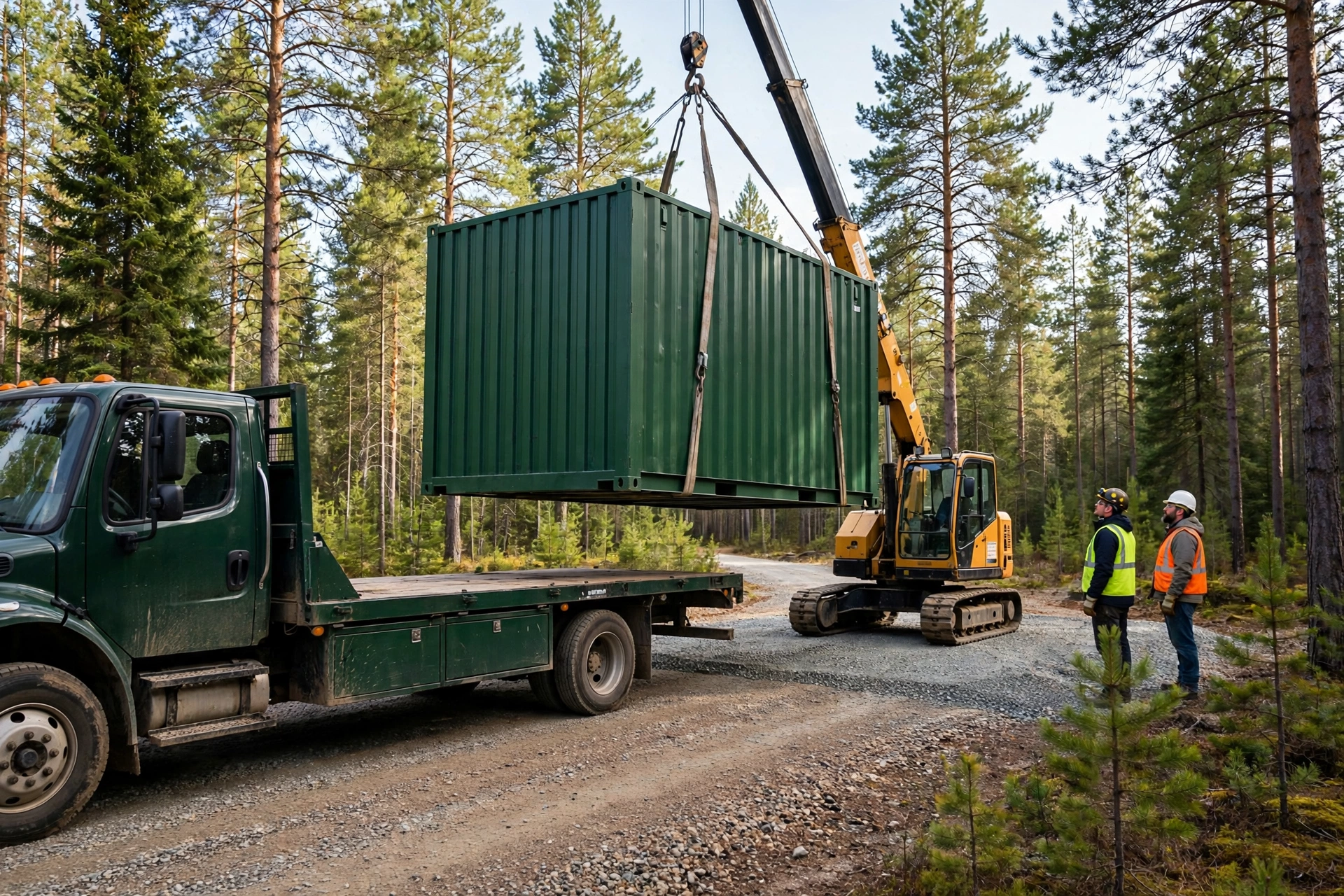
With a site-built house, a difficult lot means a bigger construction budget. With a portable home, the lot decides something more binary: whether a finished house on a truck can get there and get set. Here is the checklist we walk through with every land buyer.
The checklist
- 1. Access: a road a flatbed can travel — width, turns, bridges, seasonal restrictions, and room at the end for a crane to work
- 2. Zoning & permits: does the municipality allow a dwelling (or garden suite / secondary unit) on this lot, and are there setbacks from water or lot lines that shrink your options?
- 3. Services: power at the road? A well or municipal water? Septic suitability — a perc test tells the truth
- 4. Slope & soil: gentle is lovely; steep means engineering. Wetland and floodplain designations are hard stops
- 5. Sun: for solar and for sanity — a south-facing clearing beats a beautiful dark hollow
- 6. Trees: which ones shade the home in summer (good), which ones lean over the placement site (a conversation with an arborist)
- 7. The neighbours & the future: road associations, easements, and whether the lot can be serviced in winter if you'll live there full-time
None of these checks require owning the land. Most can be done from the listing, the municipal office and a site visit — and we will happily review a listing with you before you make an offer. A twenty-minute check has saved more than one buyer from a gorgeous, unusable lot.
Found a lot you love? Send us the listing. We'll grade it against this list and tell you straight whether a PHouse belongs there.
Have a lot in mind?
Send us the address or the listing and we'll tell you honestly whether a PHouse fits — access, services, permits and all. It's free and there's no obligation.